



International Maritime Dangerous Goods Code
Shipping Dangerous Goods by Sea
Online Training Certification Course
From the highest rated and most trusted online training company - since 2008.
This course is designed to familiarize you with the most recent edition of the IMDG Code which is a two-volume book that covers various provisions for the safe maritime transport of dangerous goods. It will acquaint you both with the rules put forth by the IMDG Code and with the layout of the book itself.
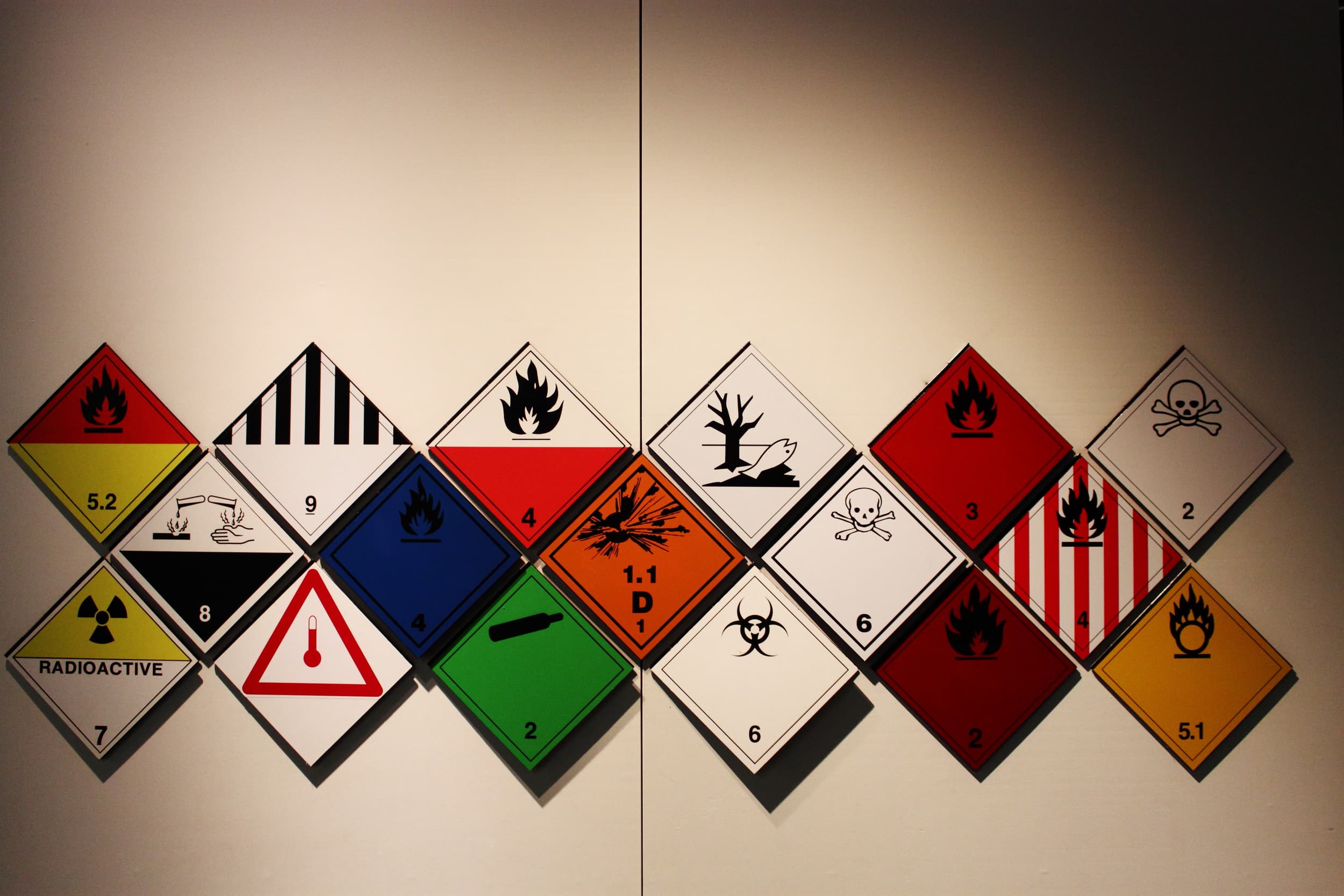
Shipping dangerous goods requires many precautions, even before setting sail. Exposure to hazardous materials (HAZMAT) can harm ecosystems, damage property, and cause long-term health problems, immediate injury, and death. That's why it is so important for the maritime industry to properly pack, label, store, load, and track dangerous goods. Hazmat training helps the freight industry protect people and the environment.
This online certification meets the requirements set forth under the International Maritime Dangerous Goods Code (IMDG Code). The online training program meets all IMDG training requirements for shipping by sea.
This course is for:
Dockworkers, longshoremen, freight forwarders, container packers, port employees, and other land-based ocean shipping professionals involved in transporting hazardous materials must understand relevant portions of the IMDG Code.
Case Study: On April 5, 1998, the Sea Land Mariner, sailing under the flag of the Marshall Islands, left the port of Singapore with a load of 1,500 containers. All dangerous goods were properly documented and stowed. Two weeks later, on the April 18, an explosion occurred in the number 7 hold as two fitters conducted routine maintenance in the area. Following the explosion, a fire began; it took nine more days to completely extinguish the fire. During the investigation into the cause of the explosion, it was discovered that the ship was carrying many containers listed as "Expandable Polystyrene, Self-Extinguishing." This product is a Class 9 - Miscellaneous good with the proper shipping name of POLYMERIC BEADS, EXPANDABLE (UN 2211). Not only were the goods incorrectly documented, but they were also improperly packaged and not placarded. As a result, flammable vapors built up in the unventilated holds in which these goods were stowed. Hot falling slag from the fitters' welding activities had ignited the vapors. The Maritime Administrator, Republic of the Marshall Islands, officially named improperly documented shipments and a lack of placarding as the reasons for the Sea Land Mariner explosion and fire.
Takeaway: Every potentially dangerous good must be checked against the IMDG Code by shippers and carriers alike. If a good is found listed on the DGL, all provisions relating to it must be carefully followed - this may be a matter of life and death.
Available languages: 100+ languages - translation provided by Google Translate (Select Language bottom of page)

Governing Regulations
What are the governing regulations?
The United Nations International Maritime Organization (IMO) publishes the IMDG Code. The 2022 Edition, including Amendment 41-22, renders the previous 2020 Edition obsolete.Persons taking this course and working on U.S. or foreign vessels operating in the navigable waters of the United States also need our DOT Hazardous Materials General/Security Awareness and Function Specific (49 CFR §172) training.
If you don't already have a copy, you'll need to purchase the International Maritime Dangerous Goods IMDG Code both for reference purposes in your day to day shipping operations, and while taking this course.
What You'll Learn
- About This Course
- Course Objectives
- Introduction to the IMDG Code
- Code Overview
- Code Contents
- Code Numbering
- Code Amendments
- About Amendment 41-22
- IMDG Code Part 1
- Introduction and General Provisions
- Definitions, Measurement, and Abbreviations
- Training of Shore-Based Personnel
- Security Hazard Provisions
- General Provisions for Radioactive Material
- IMDG Code Part 2 - Classification
- Classification of Dangerous Goods
- The UN Number
- Multiple Hazard Classification
- Transport of Samples and Wastes
- Class 1-Explosives
- Class 1 Compatibility Groups and Classification Codes
- Class 1 Classification Procedures
- Class 2-Gases
- Class 2 Subdivisions and Mixtures of Gases
- Class 3-Flammable Liquids
- Packing Group Assignment
- Class 4 - Flammable Solids
- Class 4.1 - Flammable Solids, Self-Reactive Substances, and Solid Desensitized Explosives
- Class 4.2 - Substances Liable to Spontaneous Combustion
- Class 4.3 - Substances That Emit Flammable Gases When in Contact with Water
- Class 5 - Oxidizing Substances and Organic Peroxides
- Class 5.1 - Oxidizing Substances
- Class 5.2 - Organic Peroxides
- Class 6 - Toxic and Infectious Substances
- Class 6.1 - Toxic Substance
- Class 6.2 - Infectious substances: Definitions
- Categories of Infectious Substances
- Class 6.2 Exemptions
- Class 7 - Radioactive Material
- Class 8 - Corrosive Substances
- Class 8 Packing Groups
- Class 9 - Miscellaneous Dangerous Substances and Articles and Environmentally Hazardous Substances
- Environmentally Hazardous Substances
- Lithium Batteries
- Marine Pollutants
- IMDG Code Part 3 - Introduction
- Proper Shipping Names
- Using the Dangerous Goods List
- Special Provisions for Certain Goods
- Limited and Excepted Quantities
- Appendix A, B, and Index
- Key Changes under Amendment 41-22
- IMDG Code Part 4 - Packing and Tank Provisions
- Packing Definitions
- Types of Containers
- General Provisions for Packing Dangerous Goods
- Overview of the List of Packing Instructions
- Using the List of Packing Instructions
- Special Packing Provisions for Goods of Various Classes
- Special Packing Provisions for Infectious Substances and Radioactive Material
- Use of Portable Tanks and Multiple-Element Gas Containers
- Portable Tank Instructions and Special Provisions
- Look-up of Portable Tank Instructions
- Bulk Container Codes
- Use of Bulk Containers
- IMDG Code Part 5 - Consignment Procedures
- Consignment Procedures
- Marking of Packages
- Labeling of Packages
- Placarding of Cargo Transport Units and Bulk Containers
- Marking of Cargo Transport Units and Bulk Containers
- Dangerous Goods Transport Documents
- Container/Vehicle Packing Certificate
- Other Documentation Required Aboard the Ship
- Special Provisions
- IMDG Code Part 6 - Construction and Testing of Packagings, Intermediate Bulk Containers, Large Packagings, Portable Tanks, Multiple-Element Gas Containers, and Road Tank Vehicles
- Provisions for the Construction and Testing of Packagings
- Code for Designating Types of Packages
- Marking
- Provisions by Packaging Type
- Documentation of Testing
- General Provisions
- Provisions for Packagings for Class 6.2 - Category A
- Provisions for Packages and Radioactive Material
- Provisions for Intermediate Bulk Containers
- IBC Construction and Testing
- Provisions for Large Packagings
- Large Container Construction and Testing
- Bulk Container Provisions
- IMDG Code Part 7 - Provisions Concerning Transport Operations
- Stowage Provisions
- Segregation
- Consigning Operations for Cargo Transport Units
- CTUs, Special Situations
- Stowage and Segregation on Containerships
- Stowage and Segregation on Ro-Ro Ships
- Stowage and Segregation on General Cargo Ships
- Shipborne Barges on Barge-Carrying Ships
- Provisions for Shipborne Barge Cargo
- Special Requirements in the Event of an Incident and Fire Precautions Involving Dangerous Goods
- Responding to Incidents Involving Dangerous Goods
- Exemptions, Approvals, and Certificates
- Summary
- Additional Resources
- Exam
It will take a MINIMUM of 4 hours to complete this online course. The student may log on and off as needed. A bookmark will be set so when they log back in they will return to where they left off.
We have no restrictions on how long a person takes to complete a course. Likewise, if you are purchasing for others, we have no time limit on assigning courses, so you can purchase a larger quantity than you currently need and take advantage of volume discounts.
The IMDG Code does not specify a required recertification schedule. However, HAZMAT employees on US and foreign vessels operating in the navigable waters of the United States must follow the retraining requirements in 49 CFR Part 176, Section 13 which requires retraining every three years.
Courses purchased through selected UK partners/third parties have a 14 day refund policy from the day of their purchase, providing the learner has not accessed/logged into their course(s).
Each student will receive 0.4 CEUs (or 4 CMEs) from Compliance Training Online® for completing this course.

Mary R
International Maritime Dangerous Goods Code 41-22This a great course! Thank you!

Jason W
International Maritime Dangerous Goods Code 41-22It was a well presented course and the material covered was relevant to my needs.
Gilberto R
International Maritime Dangerous Goods Code 41-22great knowledge and experience
Nicole C
International Maritime Dangerous Goods Code 41-22I think you covered everything required. Definitely helpful to take notes and to have had training before to better understand the contents.
Christopher A
International Maritime Dangerous Goods Code 41-22Great training as always. I have taken multiple courses over the years and I have been very pleased with the delivery of the information. I felt that the final exam focused on being able to properly navigate the IMDG code requirements. I would suggest adding videos to enhance the training experience.
Lucy C
International Maritime Dangerous Goods Code 41-22Very professional and complete. Absolutely useful, I feel very capable to understand and apply all that I learned here. u I Highly satisfied with what I have learned.
Matheus F
International Maritime Dangerous Goods Code 41-22Muito boa a experiência, e o conteúdo da apostila é muito satisfatório.

Guilherme R
International Maritime Dangerous Goods Code 41-22Very nice and informative.
Claudia A
International Maritime Dangerous Goods Code 41-22Both volumes are so well explained that it is easy to follow. Thank you!
Mark J
International Maritime Dangerous Goods Code 41-22Great course! Keep it up!
Gary M
International Maritime Dangerous Goods Code 41-22This course taught me how to use the books to find the information I need regarding hazardous goods. I realize that I'll need to take additional training for my particular needs in the items I ship.
Tran D
International Maritime Dangerous Goods Code 41-22Easy to understand with the correct tools.
Nhi N
International Maritime Dangerous Goods Code 41-22This lesson and test give a lot of knowledge. It's very helpful. Thank you.
Sonya C
International Maritime Dangerous Goods Code 41-22I am truly impressed with the majority of the lecture. This is my second time taking the test and I learn more every time. I would like to see the lesson go into more detail with the last two sections of the lesson. Overall great course.
Randy G
International Maritime Dangerous Goods Code 41-22This was just packed with a wealth of great information. I knew a lot of it but learned so much more.
James M
International Maritime Dangerous Goods Code 41-22the course was an effective introduction tot he IMDG regulations
Philip L
International Maritime Dangerous Goods Code 41-22The IMDG Course information was very helpful to refresh my knowledge concerning HAZMAT consideration for maritime shipments. The portions on Packaging and Bulk Containers was specifically an area of high interest, because those requirements are my direct responsibility.
Michael W
International Maritime Dangerous Goods Code 41-22Great course. always a pleasure
Christopher A
International Maritime Dangerous Goods Code 41-22Excellent course. All of the section references to the imdg-code Code books were correct and very helpful for finding information. I have used this course previously and will likely use this course again.
Allen D
International Maritime Dangerous Goods Code 41-22this is my first time taking this course- I didn't know what to expect- but it is a good test so far
Rick J
International Maritime Dangerous Goods Code 41-22this test is very helpful in helping you learn the valuable lessons needed in shipping goods
Cynthia Q
International Maritime Dangerous Goods Code 41-22Very helplful and interesting.
Sarah A
International Maritime Dangerous Goods Code 41-22This course was easy to take and good for someone that gets interrupted multiple times a day. I thought it was thorough and a good way to re-certify myself.





THE BEST ONLINE TRAINING EXPERIENCE POSSIBLE

Fast
Your time is valuable. We've designed our site to be as fast as possible.

Easy to use
You'll never get lost or confused with us.

Immediate Access
There's no waiting period. Begin the course as soon as you sign up.

Anywhere Anytime
Internet connection and a computer, tablet, or smartphone.

Up to date
We update our courses as soon as new regulations come out.