BUSINESS ACCOUNTS
Transporting Dangerous Goods By Road & Rail in Canada
Canada TDG Regulations
Online Training Certificate Course
From the highest rated and most trusted online training company - since 2008.
Canada’s Department of Transport, known as Transport Canada, oversees all aspects of transport in the country. Safety across the entire transport system and within each major mode of transport is the primary objective of this oversight, and the safe transport of dangerous goods is a key area of focus.
To this end, Transport Canada has developed a comprehensive set of safety standards and regulations for the transport of dangerous goods within Canada’s borders. This is known as the Transportation of Dangerous Goods (TDG) Act, 1992, and is commonly referred to by the phrase “TDG Regulations.” This course is an overview of these regulations set forth by Transport Canada.
This course is for:
A TDG training certification is required for all people who handle, offer for transport, or transport dangerous goods on Canada's roads and railways. This includes all employees who handle, load, ship, or transport dangerous goods. There is a provision allowing employees without a certification to be supervised by another employee who holds a training certificate.
Case Study: A train pulling oil tank cars derailed and burst into flames near the small northern Ontario town of Gogama. The accident occurred March 7, 2016, three weeks after another oil-carrying train burst into flames just 14 kilometres away from Gogama. The organization Environment Canada reported that the Gogama oil spill may impact the health of local waterways, affecting the pickerel fish that live there. This, in turn, has the potential to damage the local economy because the fishing tourism industry depends on the pickerel population. Although government and train company officials have issued assurances that after-effects of the accident have been fully addressed, local area residents are taking a wait-and-see attitude.
Key Takeaways: The effects of accidents involving dangerous goods can be far-reaching, extending to human lives and livelihoods, animals, the environment, and the economy. No compromises should ever be made to safety, and all involved in the transportation of dangerous goods should stay current with their knowledge and application of the TDG Regulations.

Governing Regulations
Like the safety training required by the United States' Occupational Safety and Health Administration (OSHA), Canada training is required by Occupational Health and Safety (OHS). Adequate training is mandated under Part 6 of the TDG. Canada takes these regulations seriously, and compliance is mandatory.
What You'll Learn
Introduction to Transportation of Dangerous Goods by Road and Rail in Canada
- Key Terms
The Transportation of Dangerous Goods (TDG) Act, 1992
- TDG Regulation Parts
- TDG Regulation Schedules
- Development of the TDG Regulations
- Application of the TDG Regulations
- How Are the TDG Regulations Administered?
- Using the TDG Regulations
Roles and Responsibilities Under the TDG Act
- Shipper Responsibilities
- Carrier Responsibilities
- Receiver or Consignor Responsibilities
- Employer and Employee Responsibilities
Understanding Dangerous Goods
- Classification of Dangerous Goods
- What Is a Means of Containment?
- Standards Related to Containment
- What Is a Packing Group?
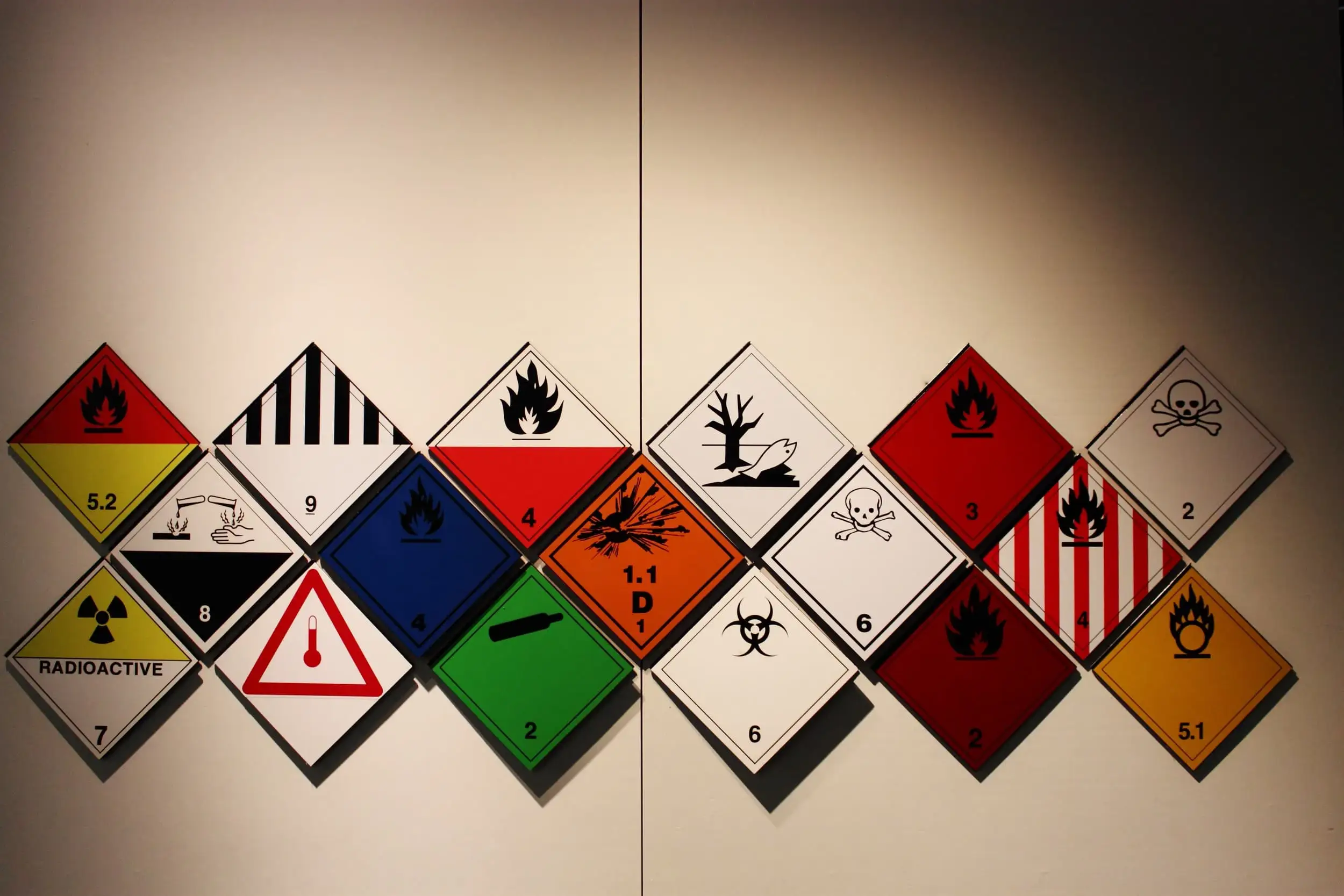
- What Are Safety Marks?
- Who Is Responsible for Classifying a Good as Dangerous?
- Proof of Classification
- Special Situations Related to Classification
- Selecting a Container for a Dangerous Good
Dangerous Goods Safety Marks
- Requirements for Dangerous Goods Safety Marks
- Size and Orientation of Labels and Placards
- Ways to Display a UN Number
- Marking Small Means of Containment
- Marking Large Means of Containment
- The Danger Placard
- Consignor Responsibility for Safety Marks
- Carrier Responsibilities for Dangerous Goods Safety Marks
- Removal or Change of Dangerous Goods Safety Marks
Dangerous Goods, Classes 1 to 3
- Class 1 - Explosives
- Class 1 Divisions
- Class 1 Packing and Containment
- Class 1 Compatibility Groups
- Class 1 Safety Marks
- Special Provisions Related to Class 1
- Class 2 - Gases
- Class 2 Divisions
- Aerosols and Exemptions
- Class 2 Means of Containment
- Class 2 Safety Marks
- Determining Lethal Concentrations of Gases
- Class 3 - Flammable Liquids
- Class 3 Packing Groups
Dangerous Goods, Classes 4 to 6
- Class 4 - Flammable Solids, Spontaneously Combusting Substances, and Water-Reactive Substances
- Class 4 Divisions
- Class 4 Packing Groups, Containment, and Safety Marks
- Class 5 - Oxidizing Substances and Organic Peroxides and Class 5 Divisions
- Class 5 Packing Groups, Containment, and Safety Marks
- Class 6 - Toxic and Infectious Substances and Class 6 Divisions
- Class 6 Packing Groups, Containment, and Safety Marks
Dangerous Goods, Classes 7 to 9
- Class 7 - Radioactive Material, Containment, and Safety Marks
- Class 8 - Corrosives
- Class 8 Packing Groups, Containment, and Safety Marks
- Class 9 - Miscellaneous Products, Substances, or Organisms
- Lithium Cells and Batteries
- Class 9 Packing Groups, Containment, and Safety Marks
- Specific Containment Rules for Classes 3, 4, 5, 6.1, 8, and 9
Training Requirements Under the TDG Act
- Training Certificate Requirements
- Training Requirements for Foreign Carriers
- What Is Adequate Training?
- The Training Certificate
- Certificate Issuance and Expiration
- Contents of the Certificate
- Keeping and Showing Proof of Training
Emergency Response Assistance Plan
- The ERAP Limit
- When Is an ERAP Required?
- Applying for Approval of an ERAP
- Applying for Renewal or Revision of an ERAP
- Approval and Refusal of an ERAP
- Revocation and Request for Review
- Compensation for Special ERAP Situations
TDG Act Documentation
- Consignor Responsibilities for Documentation
- Carrier Responsibilities for Documentation
- Consist for Transport By Rail
- Legibility and Language Requirements for Transport Documents
- Information Required on a Shipping Document
- Additional Information Required on a Shipping Document
- Consignor's Certification
- Location of Shipping Documents
- Retention of Shipping Documents and Information
- The Protective Direction
- Permit for Equivalent Level of Safety
- Applying for a Permit for Equivalent Level of Safety
- Renewal or Revision of a Permit for Equivalent Level of Safety
- Approval and Refusal for a Permit for Equivalent Level of Safety
- Revocation and Request for Review
TDG Act Reporting Requirements
- Reporting an Emergency
- Contents of an Emergency Report
- Reporting a Release or Anticipated Release
- Contents of a Release or Anticipated Release Report
- The 30-Day Follow-Up Report: Road, Rail, or Marine
- Security Reports: Loss or Theft Report
- Security Reports: Unlawful Interference Report
Inspectors and Inspections
- The Inspector's Certificate of Designation
- The Inspection Certificate
- Detention of Dangerous Goods or Means of Containment
- Direction to Remedy Non-Compliance
- Direction Not to Import or to Return to Place of Origin
- Review of Detention or Direction
Specific TDG Regulations for Road Transport
- Transporting Dangerous Goods from the United States in Canada
- Transporting Dangerous Goods to or from Air Transport
- Transporting Dangerous Goods to or from Ship Transport
- Reshipping Dangerous Goods within Canada
- Transportation of Explosives in a Road Vehicle
Specific TDG Regulations for Rail Transport
- Transporting Dangerous Goods from the United States in Canada
- Transporting Dangerous Goods to or from Air Transport
- Transporting Dangerous Goods to or from Ship Transport
- Reshipping Dangerous Goods within Canada
- Locating Placarded Railway Vehicles on a Train
- Coupling Railway Vehicles
- Tank Cars for Flammable Liquids
Summary
Additional Resources
Final Exam
Most of our courses take about two (2) hours to complete. If a final exam is included, you should plan for an additional 30 minutes. Courses that require additional training time will clearly state that in the course title or description.
You’ll have unlimited access during your enrollment or access period. Most CTO courses must be completed within 90 days of purchase. OSHA-authorized Outreach Training provides up to 180 days to finish the course and required survey. Timeframes vary depending on the specific course and regulatory requirements. Please refer to our Terms & Conditions for more details.
Because our courses are self-paced, you can log in and out as needed and complete your training on a schedule that works best for you.
A training certificate issued for transport by road vehicle, railway vehicle, or ship expires 36 months after its date of issuance according to Transport Canada directives.
DOT HAZMAT Awareness, Security & Function Specific
This DOT HAZMAT training online course satisfies all ground hazmat carrier shipping requirements including FedEx and UPS. It is intended for both initial and recurrent training. It will...
IATA DGR 67th Edition
This online course satisfies all air transport carrier dangerous goods by air requirements includingFedExandUPS. It covers how to use theIATADangerous Goods...

Multimodal DOT & IATA HAZMAT Shipping
This DOT and IATA Multimodal HAZMAT Shipping Safety Training Course covers regulations for safely transporting hazardous materials and dangerous goods by road and air...