BUSINESS ACCOUNTS
Workplace Fires and Emergencies (General Industry)
Online Training Certificate Course
29 CFR 1910 Subpart E & Subpart L
From the highest rated and most trusted online training company - since 2008.
This course is offered in partnership with AdvanceOnline, a 360training® company.
This online certification course details planning and protective measures for emergency response and prevention. Course topics include applicable regulations, exit route requirements, safe evacuation procedures, emergency egress, and risk mitigation practices.
Hazards exist in every workplace that can cause fires and other emergencies. Emergency action plans (EAPs) describe the actions to take in emergency situations to promote employee safety. A fire exit route plan is a critical component of an EAP because it ensures there are enough exits and fire suppression equipment so that all occupants in a building can escape quickly in an emergency.
This course is in partnership with AdvanceOnline. AdvanceOnline and Compliance Training Online™ are divisions of the 360training.
This course is for:
This fire protection certification is designed for employees in workplaces in general industry, except those in mobile workplaces such as vehicles or vessels. This safety training may help prevent serious injury in the workplace and can save lives.
This online training course meets the requirements set forth by OSHA for exit routes, emergency action plans, fire prevention plans, and fire protection.
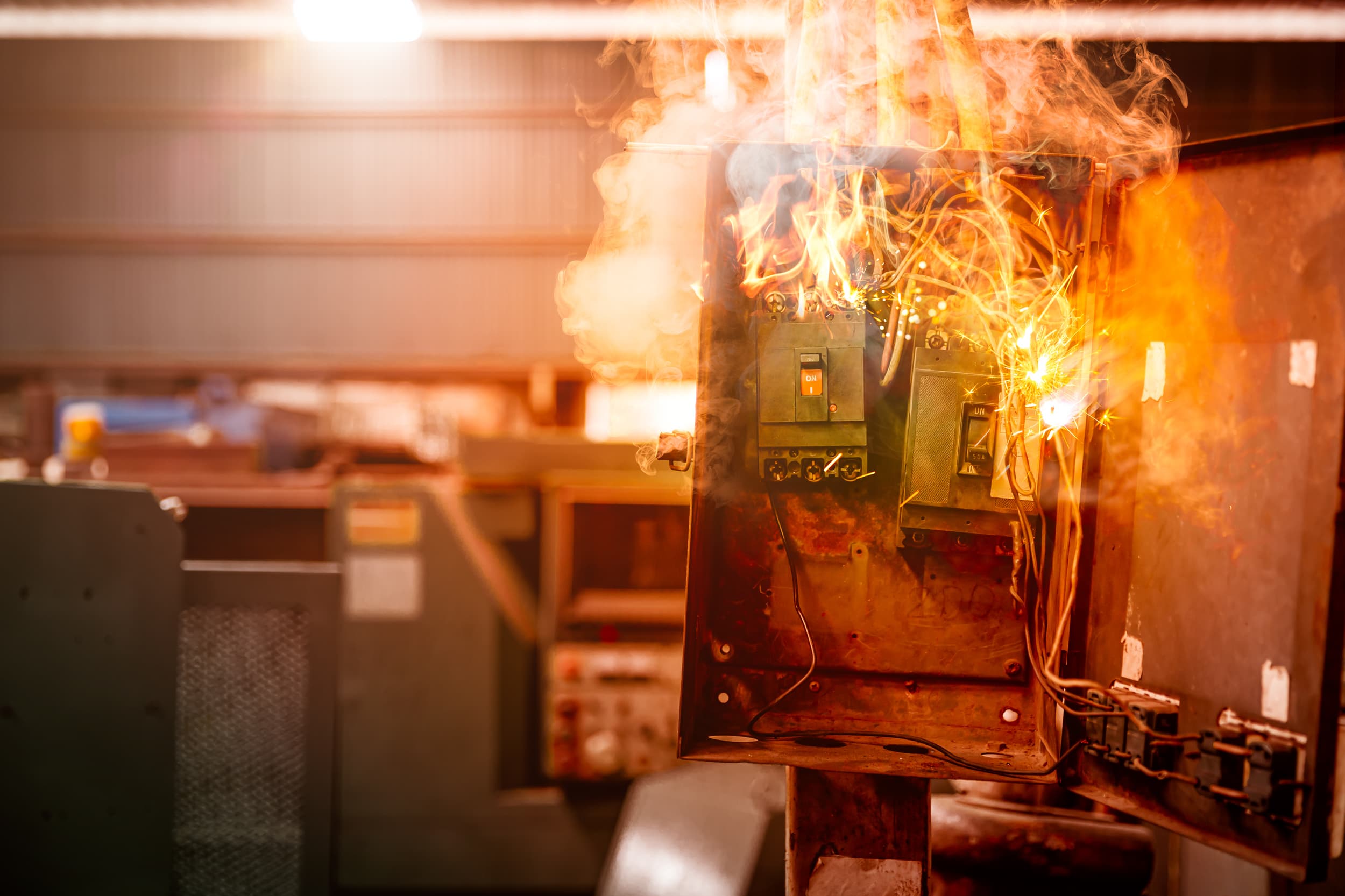
Case Study: On Thursday, October 10, 1996, around 4 a.m., a five-alarm fire broke out on the 10th floor of the 70-story building located at 30 Rockefeller Plaza in New York City, New York. The fire began around an electrical closet near where construction was being performed. The fire started in the fifth floor electrical room, and moved to five different electrical rooms. Because of the need for more electricity in a building of this size, the electrical cabling continued to be added without removing old cabling. It was squeezed tightly, leaving no clearance between cables or the I-beam. The cables burned through the electrical insulation causing a large flow of current to surge through to other electrical rooms, leading to a fire. The fire took four hours to control due to several hindrances. Renovations were taking place during this fire and electricity was cut off to the fifth floor. This cut off the smoke and fire alarms on that floor as well. They never went off. Everyone was able to evacuate safely but at least 12 firefighters and five other people suffered minor smoke-related injuries.
Key Takeaway: To prevent these accidents from occurring, it is important to follow the guidelines for safe maintenance, safeguards, and operational features for exit routes. Employee alarms systems must be working. Exit routes must be clearly marked and employers are required to install and maintain an operable employee alarm system that has a distinctive signal for warning employees of fire or other emergencies.

Governing Regulations
The Occupational Safety and Health Act of 1970 created the Occupational Safety and Health Administration (OSHA). OSHA, an agency of the U.S. Department of Labor, is charged with the enforcement of safety and health conditions of workers through the use of regulations published in the Code of Federal Regulations. OSHA regulations are published in Title 29 of the Code of Federal Regulations. Part 1910 addresses general industry standards, while Part 1926 is designated for construction industry standards. This course covers the applicable regulations of 1910 Subpart E and Subpart L.
What You'll Learn
Introduction to OSHA Standard for Exit Routes and Fire Protection
- Key Terms
- Exit Routes and Fire Protection OSHA Standard - History and Background
- Exit Routes and Fire Protection OSHA Standard - Overview
- Applicable Statistics
- Responsibilities
- Alarm Systems
- Fire Brigades
- Personal Protective Equipment (PPE)
- Applicable Regulations for Exit Routes and Fire Protection - Governing Authorities
- Applicable Regulations for Exit Routes OSHA 29 CFR 1910 Subpart E
- Applicable Regulations for Fire Protection OSHA 29 CFR 1910 Subpart L
Design and Construction Requirements for Exit Routes
- Adequate Exits
- Exit Discharge and Rules for Exit Doors
- Exit Regulations
- Outdoor Exit Routes
Types of Fire Hazards
- Maintenance, Safeguards, and Operational Features for Exit Routes
Risk Mitigation and Safe Work Practices for Fires
- Portable Fire Suppression - Fire Extinguishers
- Portable Fire Suppression - Standpipe and Hose Systems
- Fixed Fire Suppression - Automatic Sprinkler Systems
- Fixed Fire Suppression - Fixed Extinguishing Systems
- Fire Detection Systems
- Employee Alarm Systems
- Controls
- Emergency Action Plan
- Fire Prevention Plan
- Training
Summary
Additional Resources
Exam
Most of our courses take about two (2) hours to complete. If a final exam is included, you should plan for an additional 30 minutes. Courses that require additional training time will clearly state that in the course title or description.
You’ll have unlimited access during your enrollment or access period. Most CTO courses must be completed within 90 days of purchase. OSHA-authorized Outreach Training provides up to 180 days to finish the course and required survey. Timeframes vary depending on the specific course and regulatory requirements. Please refer to our Terms & Conditions for more details.
Because our courses are self-paced, you can log in and out as needed and complete your training on a schedule that works best for you.
Employers are responsible for training new personnel before assigning them to tasks that may expose them to hazards such as fire.
To ensure compliance with fire prevention and emergency action plans, safety training must be conducted at least every three years per NFPA safety codes, which are adopted by reference in 29 CFR 1910. This OSHA exit routes, emergency action plans, fire prevention plans, and fire protection course meets these training requirements.
NFPA 70E (2024): Standard for Electrical Safety in the Workplace
This course presents an overview of measures to reduce hazards presented by arc flash events. It will cover basic electrical concepts, circumstances that can present the risk of arc flashes...
Confined Space Training Online | OSHA-Aligned
Meet OSHA safety standards with our confined space training. Learn regulations for entrants, attendants & supervisors. Enroll now!

Sit Down Forklift Online Safety Training
This course will familiarize you with the regulations, responsibilities, and best practices as outlined in the CFR1910.178(a) requirements for forklift operators and forklift maintenance.