BUSINESS ACCOUNTS
Shipyard Hot Work
Online Training Certificate Course
29 CFR 1915 Subpart D
From the highest rated and most trusted online training company since 2008.
This shipyard and maritime hot work training course covers hazard awareness, applicable regulations, and an overview of safe practices when performing hot work. Course topics include the hot work permit process, hazard controls, and the responsibilities of employers and employees in ensuring worksite safety.
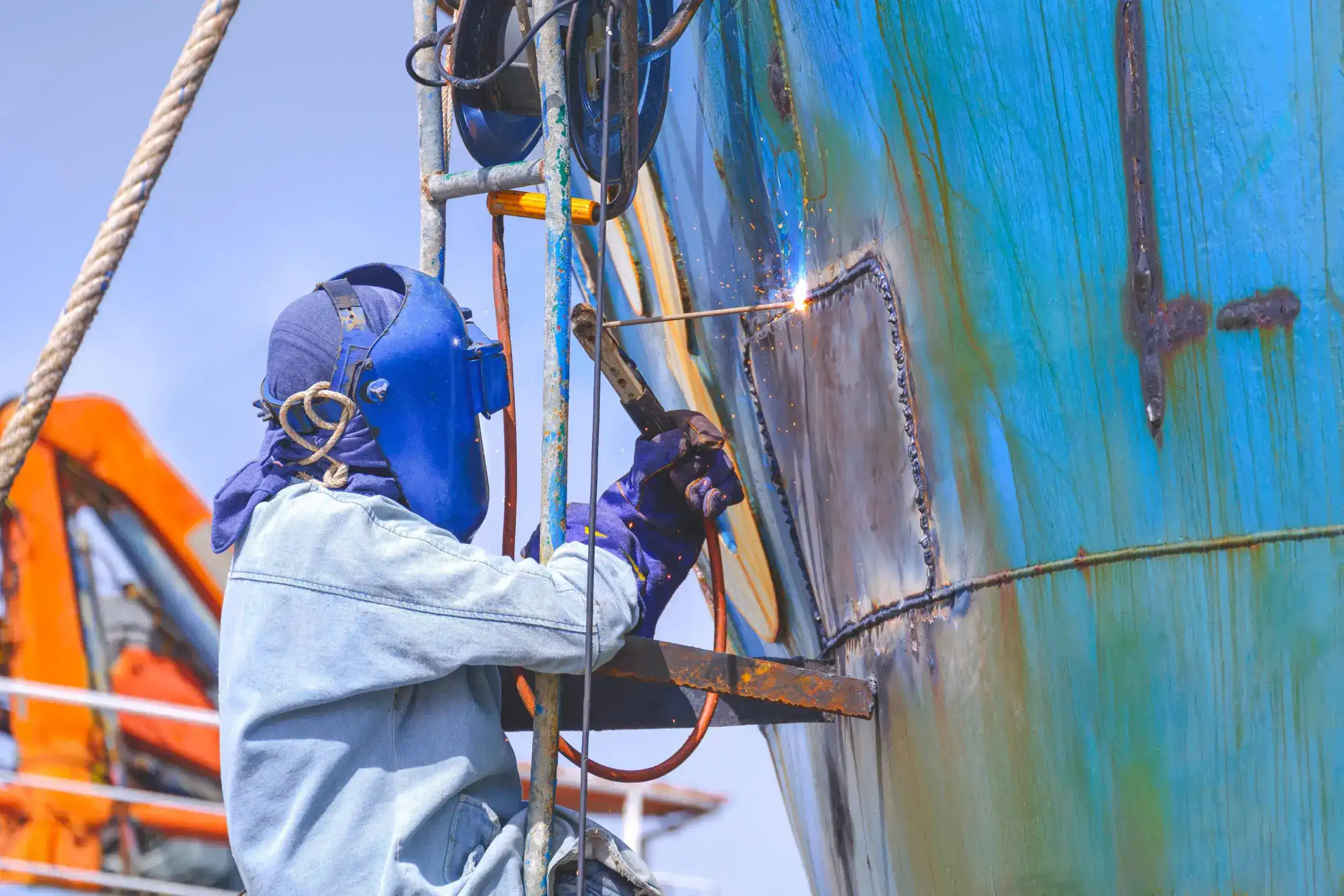
Work performed in shipyards and maritime terminals often involves hot work such as welding, cutting, brazing, or soldering. Maritime and shipyard hot work activities are dangerous, putting both people and their working environment at risk of fire, explosion, toxic atmospheres, light radiation, and extreme heat.
This course is for:
This maritime and shipyard hot work training is designed for anyone whose work includes "hot work" activities, such as riveting, welding, cutting, and brazing. This safety training may help prevent serious injury in the workplace and save lives.
This online certification course meets the requirements set forth by OSHA for hot work training in shipyards and maritime terminals.
Case Study: An arc welder was working in a confined space on a vessel when he noticed that he was five minutes late for his lunch break. He hurried to the lunch area, forgetting to completely close the gas valve on the torch in use. He also did not take the time to disconnect or shut off the gas supply to the torch at the manifold on deck, which goes against his safety training. The escaping gas from the valve mixed with the air in the space, reached an explosive potential. An electrical spark from the equipment in the space then ignited the mixture and caused both an explosion and a fire. Thankfully, all workers in the area had left for lunch prior to this happening, resulting in no shipyard worker injuries.
Key Takeaway: The worker's hasty exit meant that he neglected to ensure that the valves on the torch were tightly shut off and that the gas supply was shut off at the manifold. According to OSHA safety regulations regarding gas welding and cutting, the torch and hoses must be removed from the space entirely when it is left unattended for long periods of time. The investigation in this case showed that supervisors on site were lax in enforcing this rule. Thankfully, no workers were injured, but this lack of adherence to OSHA safety regulations could have resulted in the injury of the shipyard worker or worse, loss of life.
Available languages: 100+ languages - translation provided by Google Translate (Select Language bottom of page)

Governing Regulations
This course covers 29 CFR §1915 Subpart D, "Welding, Cutting, and Heating," which contains regulations governing all shipyard hot work.
Please note that employers and employees in the 26 states and territories with OSHA-approved state safety and health plans should check with their state agency. Although state plan standards are required to be "at least as effective as" federal standards, state plans are not always identical to federal requirements.
What You'll Learn
Introduction to Shipyard Hot Work
- Course Lessons
- Key Terms
Overview of Applicable Regulations
- Employer Responsibilities
- Employee Rights
- Safety Controls
- Injury and Death Statistics
Hot Work Ventilation Requirements and Other Worker Protections - 1915.51
- Welding, Cutting, and Heating Ventilation Requirements
- Welding, Cutting, and Heating of Metals of Toxic Significance
- Employee Protections when Performing Hot Work on Metals of Toxic Significance
- Welding, Cutting, and Heating in Confined Spaces
- Inert-Gas and Metal-Arc Welding for Ship Building and Repairing
- General Welding, Cutting, and Heating Standards
- Use of Fissionable Material in Shipbuilding and Ship Repairing - 1915.57
Hot Work in Way of Preservative Coating - 1915.53
- Flammability Testing of Surfaces with Preservative Coatings
- Protections Against Toxic Preservative Coatings in Enclosed Spaces
Hot Work Applied to Hollow Metal Containers and Structures - 1915.54
- Ventilation and Cleaning Requirements for Hollow Metal Containers and Structures
- Inspection and Testing of Hollow Metal Containers and Structures Prior to Heating
- Ventilation of Jacketed Vessels
Gas Welding and Cutting - 1915.55
- Transportation, Moving and Storage of Compressed Gas Cylinders
- Placement of Compressed Gas Cylinders
- Treatment of Compressed Gas Cylinders
- Fuel Gas and Oxygen Manifolds
- Fuel Gas Safety Procedures
- Standards for Hoses
- Standards for Torches
- Standards for Pressure Regulators
Arc Welding and Cutting - 1915.56
- Manual Electrode Holders
- Welding Cables and Connectors
- Ground Returns and Machine Grounding
- Best Practices for Operating Arc Welding Equipment
Summary
Additional Resources
Exam
Our online courses will take at least 2 hours to complete, including the final exam, unless a different timeframe is specified in the course details. The learner may log on and off as needed. When they log back in, the course will return to where they left off.
Unless otherwise indicated in the course details, learners have 60 days from the date of enrollment to complete the course. During this time, participants can log out and back in to return to where they left off in the course. The only exception is the final exam, which must be completed in a single sitting.
Learners who do not complete the course within 60 days will have their enrollment disabled and not be eligible for a refund. Please review our Terms & Conditions for details.
Employers are responsible for training new personnel before assigning them to tasks that may expose them to hazards such as fire, explosion, toxic atmospheres, light radiation, and heat associated with hot work activities.
Retraining is required when: (1) supervision and inspections indicate that the employee is not following safety-related work practices; (2) new technology, new types of equipment, or changes in procedures necessitate the use of safety-related work practices that are different from those the employee would normally use; or (3) the employee must use safety procedures that are not normally used in his or her regular job duties. OSHA considers tasks that an employee performs less often than once a year as triggering the requirement for retraining.
Chemical Hazards & Toxic Substances (Shipyard)
This online course presents an overview of chemical hazards and toxic substances that are commonly used in the maritime and shipyard industry. The course will cover...

Hot Work (Shipyard)
This online course presents an overview of safe work practices when performing hot work in a shipyard/maritime environment. The course will cover the responsibilities of both employers...
General & Maritime Silica Safety
This course is designed to assist employers and employees in understanding the standards set forth in 29CFR1910 which covers the steps to working safely where exposure...