BUSINESS ACCOUNTS
Shipyard Personal Protective Equipment
Online Training Certificate Course
29 CFR 1915 Subpart I
From the highest rated and most trusted online training company - since 2008.
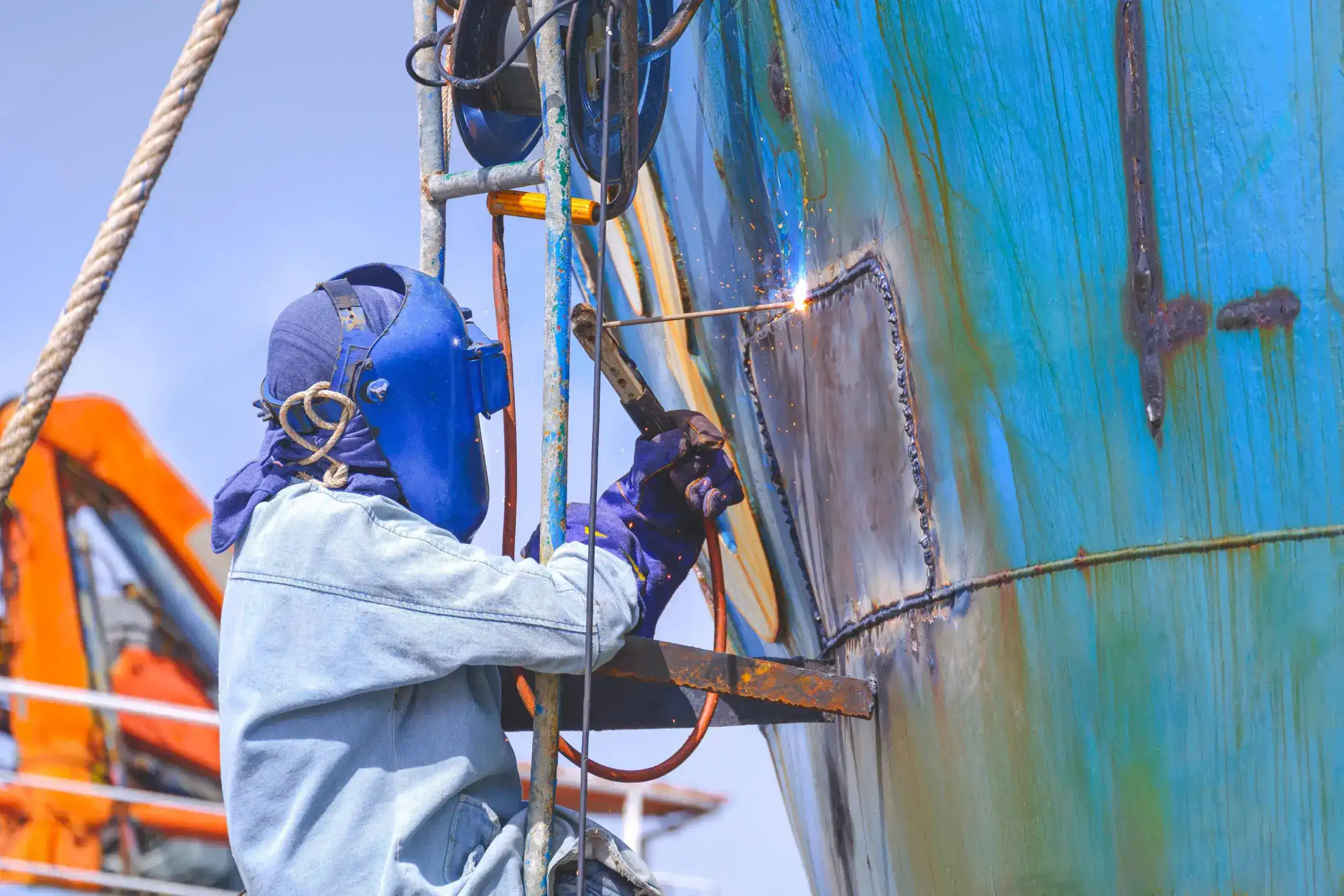
Shipyard worksites and specific job duties can expose workers to hazardous situations. Personal protective equipment (PPE) is an important component of minimizing worker exposure to such hazards. PPE must be adequate for the task and worksite and maintained properly.
This course presents an overview of personal protective equipment for shipyard workers.
This course is for:
The Occupational Safety and Health Administration (OSHA) requires shipyard employers to protect their employees from workplace hazards that can cause injury, illness, or even death. Although engineering controls and work practices are necessary to protect workers against such hazards, sometimes they are not feasible or do not provide sufficient protection on their own.
This is precisely why employees that work in shipyards are required to wear personal protective equipment while performing certain operations. This extra level of protection helps employers ensure that their workers stay safe on the job.
Case Study: In 2017, an engine room crew member was dismantling the steering motor coupling chain on a vessel. He attempted to pull out a locking split pin using pliers. As he gripped the split pin, he pulled back with force to extract it. Suddenly, the plier jaw slipped off the split pin and hit his right eye. Due to the severity of his injury, the crew member was disembarked ashore for professional medical treatment.
Key Takeaway: The crew member in this incident was wearing most of his PPE, but he was not wearing eye protection. It was also revealed that he had pulled sideways on the pliers rather than in line with the tool, which lessened the grip strength on the pin.
This simple task caused a serious eye injury simply because the crew member did not use tools correctly and did not wear appropriate PPE for the task. Hazard assessment and PPE can make the difference between workers being protected or dangerously exposed.

Governing Regulations
This course covers 29 CFR §1915 Subpart I , "Personal Protective Equipment (PPE)," which contains regulations governing shipyard personal protective equipment.
What You'll Learn
Introduction to Shipyard Personal Protective Equipment
- Shipyard Worker Injury and Illness Statistics and Prevention
- Key Terms
Overview of Applicable Regulations
- Employer Responsibilities
- Employee Rights
- Safety Controls
Assessing Hazards to Determine PPE Need, Selection, and Training Programs - Appendix to CFR 29 1915 Subpart I
- Assessing Hazards for PPE Selection
- Hazard Assessment Guidelines
- Reassessment of Hazards
- PPE Selection Guidelines
- PPE Fittings and Adjustments
General Requirements for Shipyard PPE - 1915.152
- Defective, Damaged, and Reissued PPE
- Required Training for the Proper Use of PPE
- Payment for Protective Equipment
Eye and Face Protection - 1915.153
- Eye and Face Protection with Prescription Lenses
- Selection and Use of Eye and Face Protection
- Types of Eye and Face Protection
- Eye and Face Protection Selection Chart
Head and Foot Protection - 1915.155 and 1915.156
- Criteria for Protective Helmets
- Use of Head Protection
- Types of Head Protection
- Criteria for Protective Footwear
- Use of Protective Footwear
- Types of Foot Protection
Hand and Body Protection - 1915.134
- Selection of Protective Gloves
- Use of Hand Protection
- Types of Protective Gloves
- Types of Body Protection
- Safety Requirements for Hand and Body Protection Used During Hot Work
- Safety Requirements for Hand and Body Protection Used While Operating Electrical
- Equipment
Lifesaving Equipment - 1915.158
- Safety Requirements for Personal Flotation Devices
- Types of Personal Flotation Devices
- Inspection of Personal Flotation Devices
- Safety Requirements for Ring Life Buoys and Ladders
Personal Fall Arrest Systems (PFAS) - 1915.159
- PFAS Testing Requirements
- Personal Fall Arrest System Strength Testing
- Lanyard System Force Testing
- All Other Types of Personal Fall Arrest System Force Testing
- Deceleration Device Testing
- Personal Fall Arrest System Training
- Safety Requirements for the Selection, Use, and Care of Systems and System
- Components
- Design Requirements for Personal Fall Arrest Systems
- Safety Requirements for Connectors and Anchorages
- Safety Requirements for Lifelines and Lanyards
Positioning Device Systems - 1915.160
- Criteria for Connectors and Anchorages
- Criteria for Positioning Device Systems
- Testing of Positioning Device Systems - Fixed Anchorage
- Testing of Positioning Device Systems - Lineman's Body Belts and Pole Straps
- Testing of Positioning Device Systems - Window Cleaner's Belts
- Testing of Positioning Device Systems - All Other Positioning Device Systems
- Use and Care of Positioning Device Systems
- Positioning Device System Training
Respiratory Protection - 1915.154
- Respirator Selection
- Major Respirator Types
- Respirator Fit Testing
- Use of Respirators
Summary
Additional Resources
Exam
Most of our courses take about two (2) hours to complete. If a final exam is included, you should plan for an additional 30 minutes. Courses that require additional training time will clearly state that in the course title or description.
You’ll have unlimited access during your enrollment or access period. Most CTO courses must be completed within 90 days of purchase. OSHA-authorized Outreach Training provides up to 180 days to finish the course and required survey. Timeframes vary depending on the specific course and regulatory requirements. Please refer to our Terms & Conditions for more details.
Because our courses are self-paced, you can log in and out as needed and complete your training on a schedule that works best for you.
Retraining is required when: (1) supervision and inspections indicate that the employee is not following safety-related work practices; (2) new technology, new types of equipment, or changes in procedures necessitate the use of safety-related work practices that are different from those the employee would normally use; or (3) the employee must use safety procedures that are not normally used in his or her regular job duties. OSHA considers tasks that an employee performs less often than once a year as triggering the requirement for retraining.
Chemical Hazards & Toxic Substances (Shipyard)
This online course presents an overview of chemical hazards and toxic substances that are commonly used in the maritime and shipyard industry. The course will cover...

Hot Work (Shipyard)
This online course presents an overview of safe work practices when performing hot work in a shipyard/maritime environment. The course will cover the responsibilities of both employers...
General & Maritime Silica Safety
This course is designed to assist employers and employees in understanding the standards set forth in 29CFR1910 which covers the steps to working safely where exposure...