BUSINESS ACCOUNTS
Shipyard Respiratory Protection
Online Training Certificate Course
29 CFR Part 1910.134
From the highest rated and most trusted online training company since 2008.
This course is offered in partnership with Hard Hat Training, a 360training™ company.
Shipyard workers are often expected to perform a wide variety of duties that often expose them to hazardous atmospheres. To lessen the risk of illness and injury, shipyard employers must implement administrative and engineering controls, in addition to appropriate forms of personal protective equipment (PPE).
Respiratory protection is a form of PPE that filters particles from the air, chemically purifies the air, or provides a supply of breathable air to workers to mitigate the risk of inhaling toxic, corrosive, or irritant gases, dusts, mists, fumes, and fibers.
This course presents an overview of the components of a respiratory protection program, major types of respiratory protection, selection of respiratory protection, medical evaluation that must be conducted prior to respiratory protection use, respiratory fit test standards and procedures, the use of respirators, and the maintenance and care of respiratory protection.
This course is in partnership with Hard Hat Training. Hard Hat Training and Compliance Training Online™ are divisions of the 360training™.
This course is for:
On a daily basis, shipyard workers are tasked with activities including welding and cutting steel, machining, plumbing, electrical work, painting, and cleaning up chemical and fuel residues. These workplace activities expose personnel to a variety of chemical and atmospheric hazards.
The inhalation of such hazards puts workers at risk of lung cancer, mesothelioma, and other chronic pulmonary diseases. An appropriately fitted respirator that is worn over the mouth, nose, or the full face protects the wearer against the inhalation of hazardous fumes.
This course is designed to help inform workers of the respiratory hazards present in shipyards and how to successfully mitigate them.
Case Study: In July 2016, OSHA cited a Wisconsin shipyard with 14 willful violations of overexposing workers to lead. OSHA also cited additional violations for failing to conduct hazard assessments, failing to implement a respiratory protection program, failing to train employees, and failing to address other safety and health hazards.
Workers were tasked with retrofitting a ship's engine room. Federal health inspectors determined that the employer knew the vessel contained lead and asbestos but failed to inform employees. Blood testing determined that 14 employees had lead levels up to 20 times the exposure limit, and more than 120 others had elevated blood lead levels. Overexposure to lead can have devastating effects, such as brain damage and kidney disease.
Key Takeaway: Profits and deadlines should never be more important than workplace safety. By failing to follow respiratory protection requirements, the shipyard employer put hundreds of people at risk of exposure to hazards that could cause chronic health issues. Know your rights, and always follow federal regulations and safety guidelines.

Governing Regulations
This course covers 29 CFR §1910.134, "Respiratory Protection," which contains regulations governing the selection, use, and maintenance of respiratory protection for general industry, shipyards, marine terminals, long shoring, and construction.
What You'll Learn
Introduction to Shipyard Respiratory Protection
- Respiratory Illnesses Among Shipyard Workers
- Key Terms
Overview of Applicable Regulations
- Employer Responsibilities
- Employee Rights
- Safety Controls
Development, Implementation, and Evaluation of a Respiratory Protection Program
- Elements of a Respiratory Protection Plan
- Voluntary Use of Respirators
- Designation of Program Administrator
- Respiratory Protection Training Requirements
- Respiratory Protection Program Evaluation
Major Types of Respirators
- Air-Purifying Respirators
- Filtering Facepiece Respirator Half-Masks (Dust Masks)
- Elastomeric Respirators
- Power-Air-Purifying Respirators
- Atmosphere-Supplying (Airline) Respirators
- Supplied-Air Respirators
- Self-Contained Breathing Apparatus
- Breathing Air Quality and Use
- Breathing Air Cylinders and Compressors
Selection of Respiratory Protection
- General Requirements for the Selection of Respirators
- Respirators for IDLH Atmospheres
- Respirators for Non-IDLH Atmospheres
Medical Evaluation of Workers
- Medical Evaluation Procedures
- Administration of Medical Questionnaires and Examinations
- Supplemental Information for Physicians or Other Licensed Healthcare Professionals
- Medical Determination for Employee Respiratory Use
- Medical Evaluation Record keeping
Respiratory Protection Fit Testing
- General Fit Testing Requirements
- Maintaining the Quality and Integrity of Fit Testing
- Qualitative Fit Testing (QLFT)
- Quantitative Fit Testing (QNFT)
- Testing of the Comfort and Adequacy of Respirator Fit
- Submission of New Fit Testing Protocols
- Fit Testing Record keeping
Use of Respirators
- Facepiece Seal Protection
- User Seal Check Procedures
- Ensuring Continued Respirator Effectiveness
- Safety Procedures for IDLH Atmospheres
Maintenance and Care of Respirators
- Respirator Cleaning and Disinfecting
- Respirator Cleaning Procedures [Appendix B-2 to §1910.134]
- Storage of Respirators
- Inspection of Respirators
- Respirator Repairs
- Identification of Filters, Cartridges, and Canisters for Respirators
Summary
Additional Resources
Exam
Most of our courses take about two (2) hours to complete. If a final exam is included, you should plan for an additional 30 minutes. Courses that require additional training time will clearly state that in the course title or description.
You’ll have unlimited access during your enrollment or access period. Most CTO courses must be completed within 90 days of purchase. OSHA-authorized Outreach Training provides up to 180 days to finish the course and required survey. Timeframes vary depending on the specific course and regulatory requirements. Please refer to our Terms & Conditions for more details.
Because our courses are self-paced, you can log in and out as needed and complete your training on a schedule that works best for you.
29 CFR 1910.134(k)(5) Respiratory Protection
Retraining shall be administered annually, and when the following situations occur:
(i) Changes in the workplace or the type of respirator render previous training obsolete;
(ii) Inadequacies in the employee's knowledge or use of the respirator indicate that the employee has not retained the requisite understanding or skill; or
(iii) Any other situation arises in which retraining appears necessary to ensure safe respirator use.
Chemical Hazards & Toxic Substances (Shipyard)
This online course presents an overview of chemical hazards and toxic substances that are commonly used in the maritime and shipyard industry. The course will cover...
Hot Work (Shipyard)
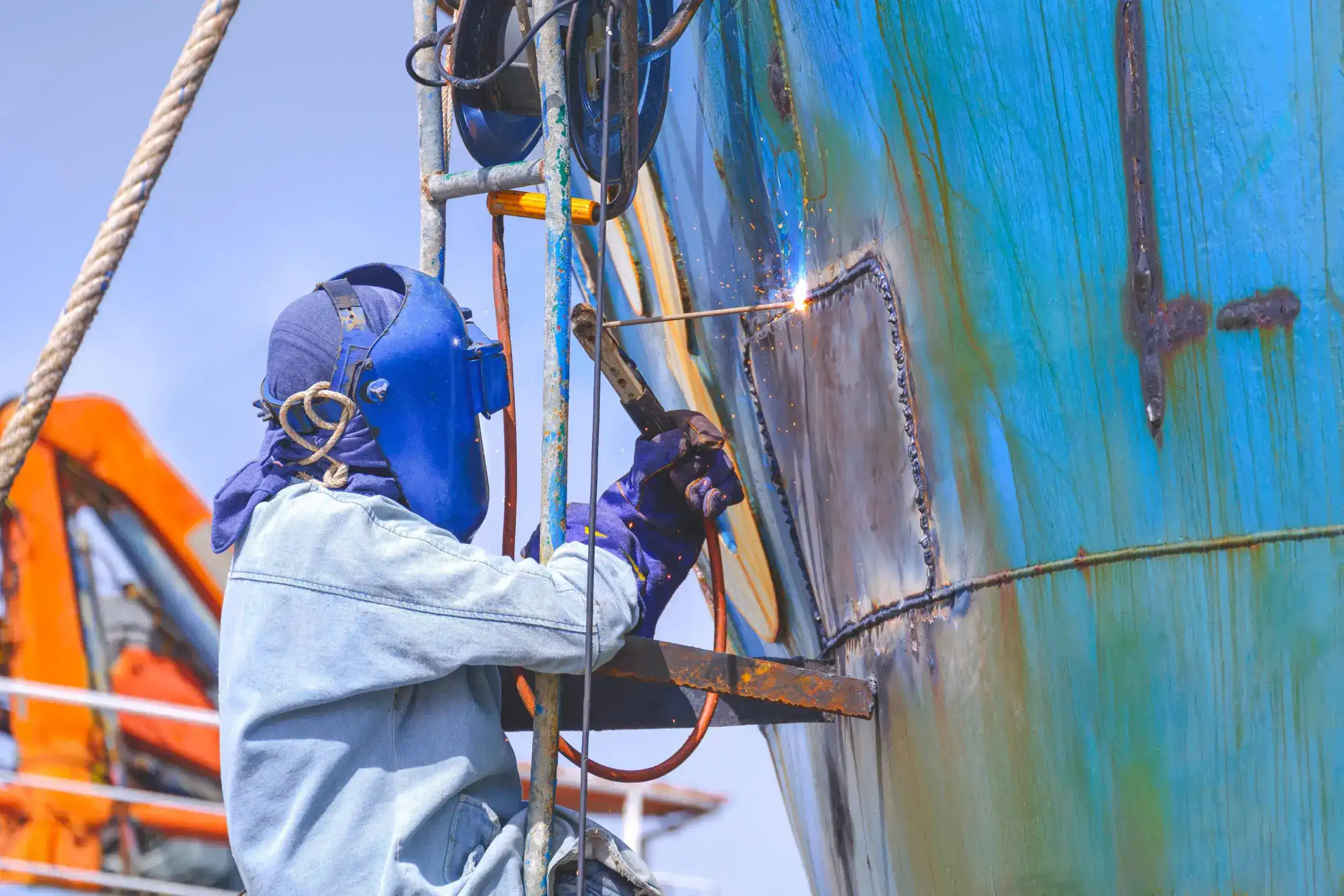
This online course presents an overview of safe work practices when performing hot work in a shipyard/maritime environment. The course will cover the responsibilities of both employers...
General & Maritime Silica Safety
This course is designed to assist employers and employees in understanding the standards set forth in 29CFR1910 which covers the steps to working safely where exposure...